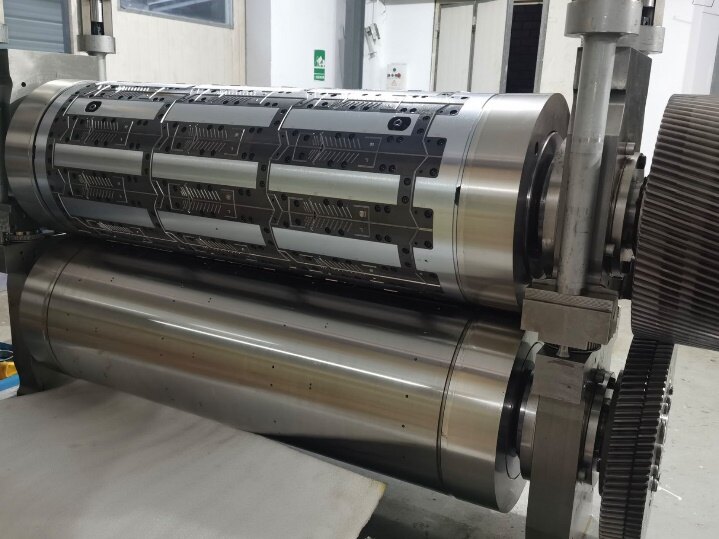

Rotary hot foil stamping technology
Rotary hot foil stamping combines heat, pressure, and controlled rotary motion to transfer metallized or holographic foil onto packaging materials. WorldColor implements this process in both web and sheetfed systems, with a focus on consistent pressure delivery, precise registration control, and efficient foil feeding.
How rotary foil hot stamping works
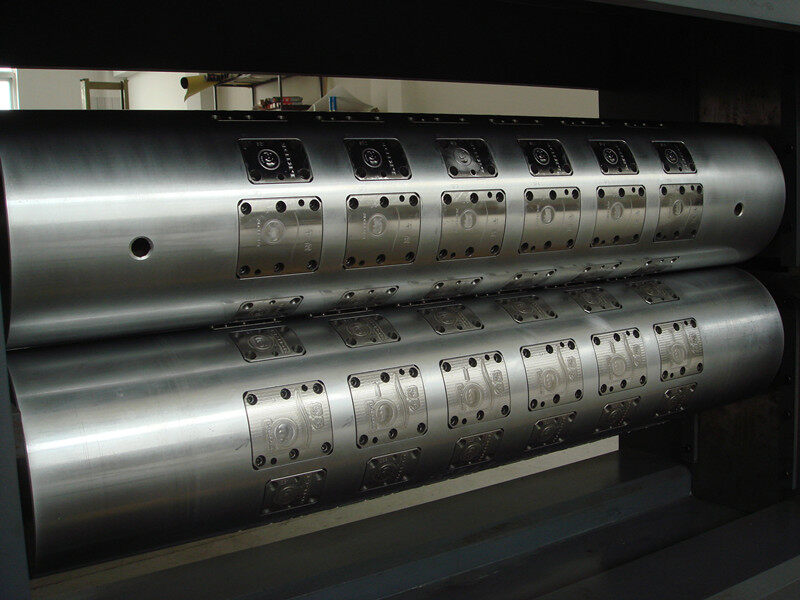
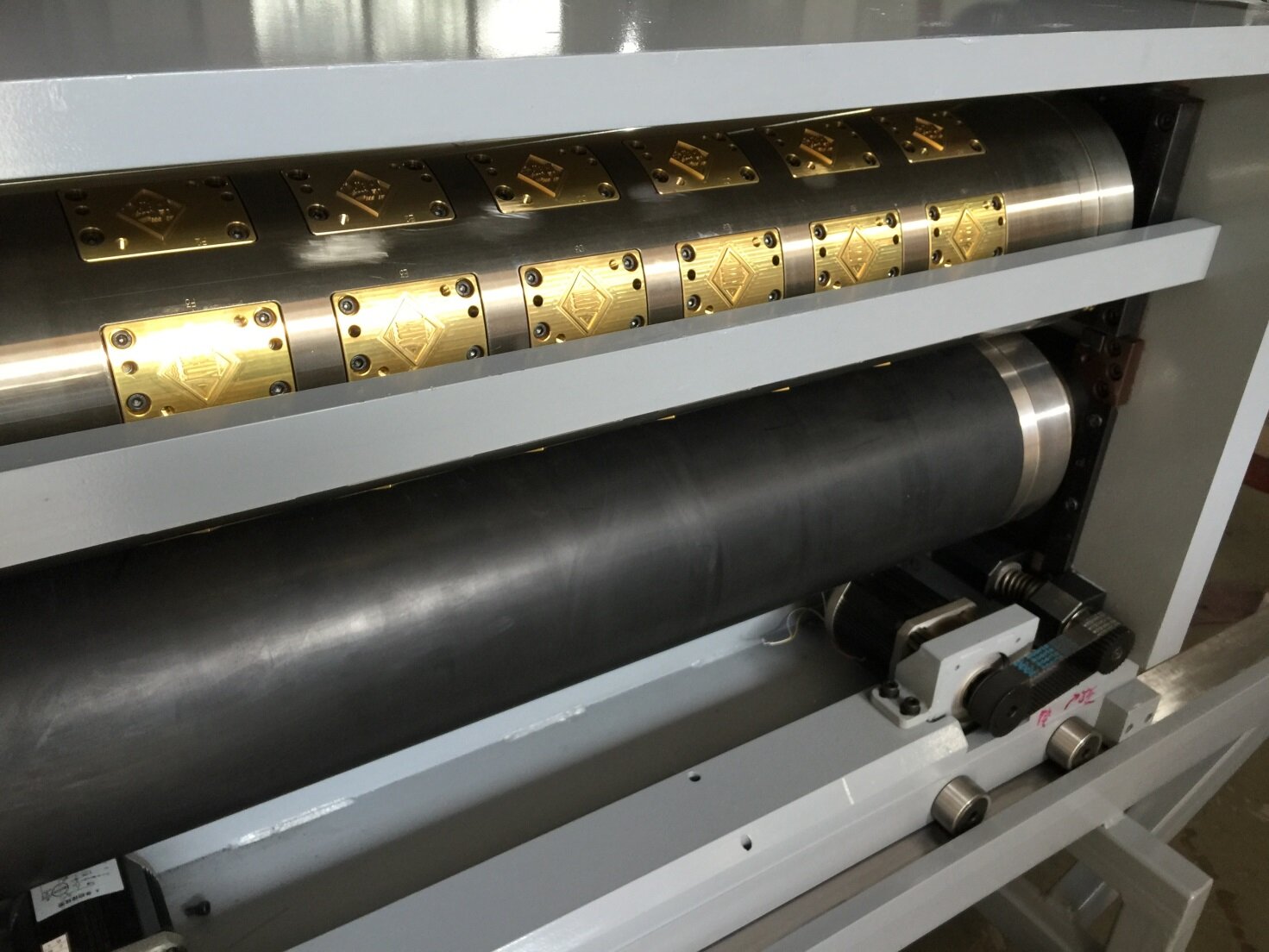
In the embossing zone, a heated rotary hot stamping cylinder ensures controlled contact between the foil and the substrate against an impression cylinder. Under heat and pressure, the image transfers from the foil to the substrate. The rotation of the cylinders creates a sequential linear contact zone rather than simultaneous large-area pressing. The register control system aligns the embossing position with the printed or holographic image, while individual foil feed step control minimizes unused gaps between successive embossed areas based on the layout.
Rotary and flat hot stamping
Below is a comparison of typical differences in the manufacturing processes described in WorldColor materials. Actual results vary based on equipment configuration, material type, foil, layout, sheeting arrangement, and operating conditions.
| Parameter | Rotational process | Flat process |
|---|---|---|
| Contact and pressure | The linear contact enables sequential pressure transmission and contributes to a relatively uniform pressure distribution. | Contact over a large area; local pressure may vary based on shape, material, and seasoning conditions. |
| Transfer and secure foil | A sequential linear contact can ensure stable foil transfer and bonding under suitable conditions. | Local pressure variations can cause incomplete transfer, lifting of previously applied ink or varnish layers during embossing, or line breaks in complex images. |
| Production Stability | High-precision cylinders and continuous motion ensure consistent product output during long production runs. | Local padding or shimming may be required; stability largely depends on proper setup and mold condition. |
| Production speed | Continuous rotary motion delivers higher performance in suitable high-volume applications. | Cyclic interruptible movement can limit performance in complex large-scale tasks. |
| Clutch | Continuous movement and register control ensure high registration accuracy for both conventional and holographic embossing. | Fit accuracy may depend on intermittent feeding, equipment, and product characteristics. |
| Using foil | Individual control of foil feed pitch reduces foil waste by minimizing gaps between consecutive embossing sections based on the image layout. | Gaps between applications and layout restrictions may increase foil consumption. |
| Embossing large areas | Sequential linear contact reduces air entrapment and improves foil transfer uniformity. | Embossing large areas may be more sensitive to air entrapment, pressure distribution, and incomplete foil transfer. |
| Fine lines and complex images | Under suitable conditions, enables embossing of fine lines and complex images. | Thin features may be more sensitive to stamp adhesion, line tearing, and pressure fluctuations. |
Proven engineering solutions
Key engineering solutions developed through continuous R&D in rotary foil hot stamping and die-cutting.
Pressure transmission during linear contact in a rotational process
A sequential linear contact promotes a relatively uniform pressure distribution across the web width.
Drive Control
Control of standard and holographic image registration under suitable operating conditions.
Individual foil feed rate control
The foil feed control system can reduce waste based on image layout and operating conditions.
Electric Heating and Temperature Control
Electric heating and temperature control system with a maximum cylinder temperature of 250 °C.
Project-specific configuration
The machine and cylinder configuration are determined by the customer's equipment, layout, and process requirements.
Roll and sheet hot foil stamping systems
WorldColor applies the same rotary hot foil stamping principle in two production formats. The configuration is determined by whether roll or sheet material is used, along with format, speed, foil layout, and registration requirements.
For continuous roll-to-roll processing. Designed for high-speed packaging applications requiring rotary foil hot stamping, controlled web guiding, foil feeding, and registration.
For processing individual sheets. The system uses rotary hot foil stamping in a sheet-based process, making it ideal for packaging applications that require precise foil feeding and registration control.
Use Cases
Examples of our technology applications for hot foil stamping, blind embossing, and die-cutting.